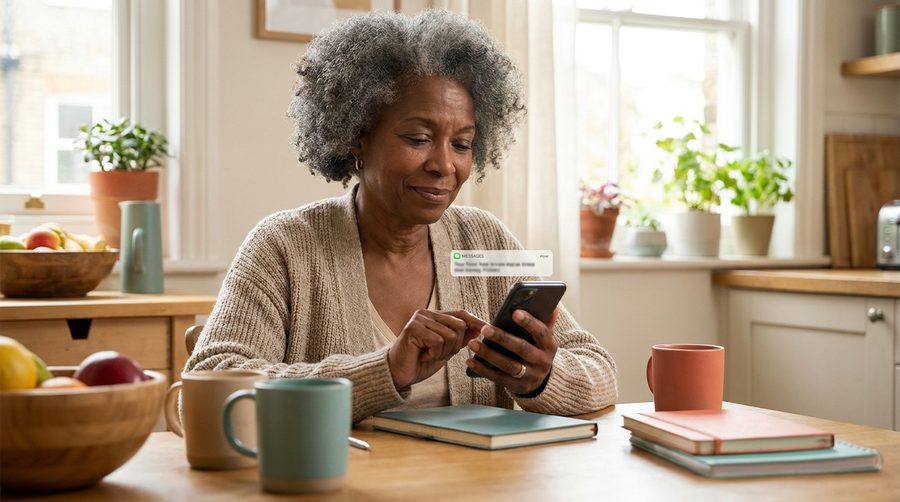

You have heard the name at dinner tables, on the news, probably from a grandkid. So what is ChatGPT, in plain English? It is a program you have a conversation with by typing (or talking). Ask it anything, "explain Medicare Part D like I am new to it," "write a birthday toast for my sister who loves gardening," "what can I cook with chicken, rice, and not much energy?". And it writes back a clear answer in seconds. No menus, no commands. Just words.
Under the hood, it has read an enormous amount of text and learned the patterns of how people explain things. That makes it remarkably good at explaining, summarizing, drafting letters, and brainstorming. It also means it occasionally states something wrong with full confidence, like a well-read friend who sometimes misremembers. For recipes and birthday toasts, no harm done. For medical, legal, or money decisions, treat it as a starting point and verify with a professional or an official source.
Trying it costs nothing and commits you to nothing: visit chat.com in your web browser, or install the ChatGPT app from your phone's app store. Type a question the way you would ask a person. There is genuinely no wrong way. You cannot break it, and it never thinks a question is silly.
Our favorite first prompt to give people: "Explain [anything you have been curious about] in simple terms, and then let me ask follow-up questions." Five minutes later, most people are hooked. Not on the technology, but on having a patient explainer on call, day or night.